Monument
Archaeological Park of Venosa
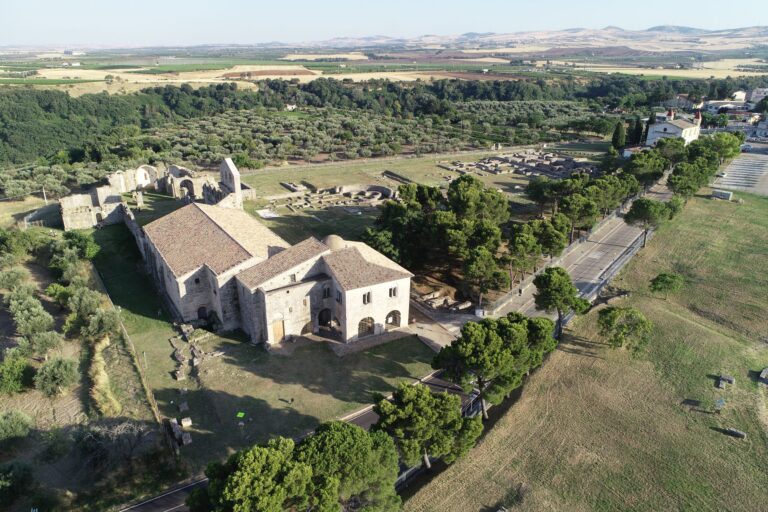
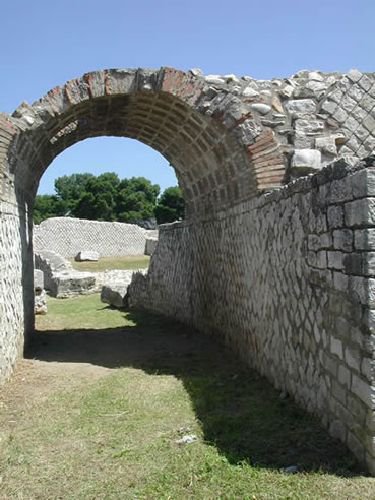
The archaeological area of the Roman colony of Venusia: baths, houses with mosaics, the amphitheatre and the Holy Trinity abbey.
The sights of Venosa, with opening times, tickets and directions. Information on the state-run sites comes from the Museums and Archaeological Parks of Melfi and Venosa, the Ministry of Culture institute that has managed them since 2024.
Monument
The archaeological area of the Roman colony of Venusia: baths, houses with mosaics, the amphitheatre and the Holy Trinity abbey.
Monument
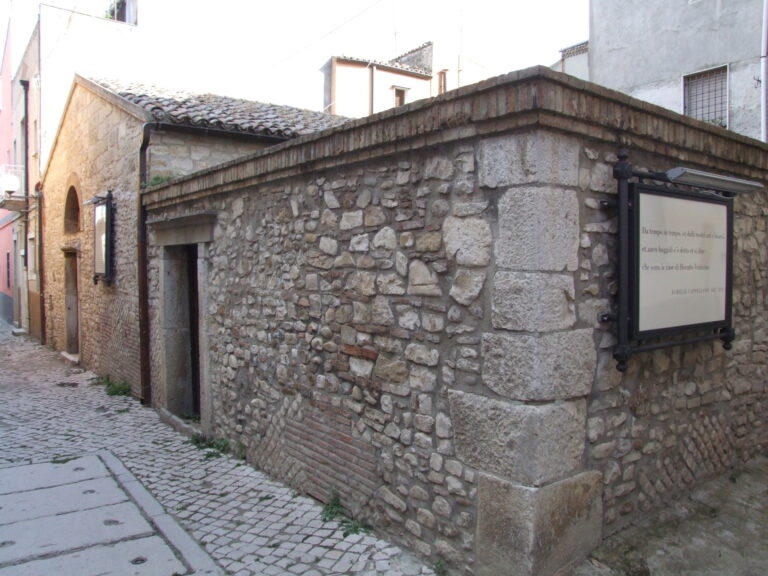
Roman remains traditionally identified as the birthplace of the poet Quintus Horatius Flaccus.
Monument
CURRENTLY CLOSED for restoration. One of the most important Jewish burial sites of the diaspora in the Mediterranean.
Monument
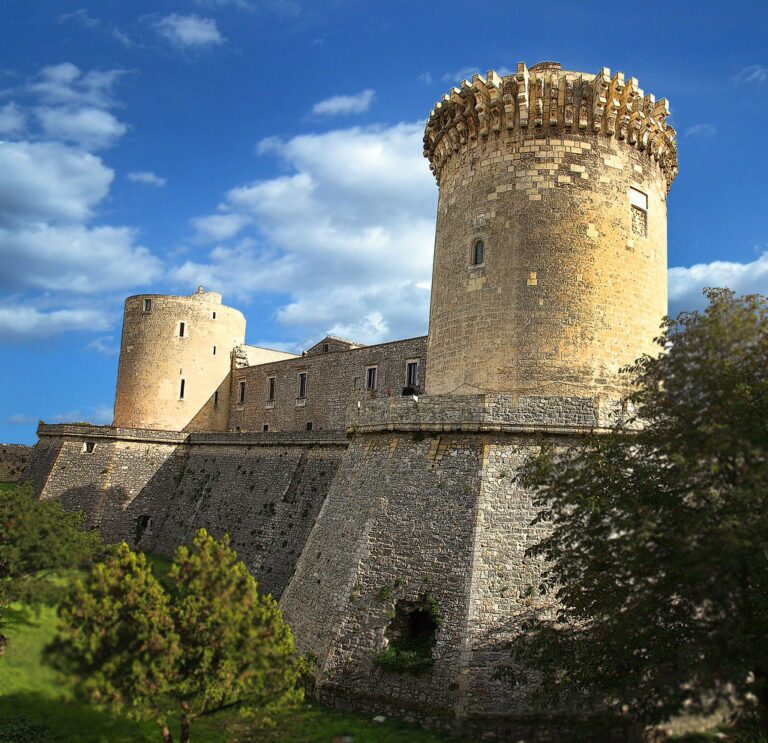
An Aragonese fortress from 1470 with four round towers and a moat, now home to the National Archaeological Museum.
Museum
The museum of the archaeology of Venosa and its territory, fully redesigned in 2021 in six sections.
Monument
A three-part complex: the old church, the early Christian baptistery and the church that was never finished.
| Ticket | Price | Valid for |
|---|---|---|
| National Archaeological Museum | €5.00 | single entry |
| Archaeological Park | €5.00 | single entry |
| Combined Museum + Park | €8.00 | 3 days |
| Circuit including the Melfi Museum | €12.00 | 3 days |
| Reduced (EU citizens aged 18-25) | €2.00 | — |
| Under 18s and the first Sunday of the month | free | — |
Museum: daily 9:00-20:00, on Tuesdays from 14:00. Last admission 19:15, closed on 25 December.
Archaeological Park: daily from 9:00 until one hour before sunset; on Tuesdays until 13:45.
Information: +39 0972 36095, daily from 8:00 to 20:00.
The Cathedral of Sant’Andrea Apostolo, commissioned by Pirro del Balzo at the end of the 15th century. The old church of the Holy Trinity, built in the early Christian period over a pagan temple, which holds the tomb of the Hauteville family and of Robert Guiscard. The late-Baroque church of San Filippo Neri, known as the Purgatorio, commissioned by Cardinal G.B. De Luca in the 17th century. Santa Maria della Scala, from the 16th century, with its coffered ceiling in painted wood. San Rocco, dedicated to the town’s co-patron saint, invoked after the plague of 1503 and celebrated on 16 August. The small church of Montalto, whose core dates back to 1032.
Churches can usually be visited before and after services, roughly from 9:00 to 12:30 and from 16:30 to 18:00. Some open only by appointment: for tours with a licensed guide, contact the Venosa Turistica Association through the contact form.
In a palazzo from 1589 next to the cathedral: portraits of bishops and cardinals, silverware and vestments, a 13th-century Byzantine wooden icon of the Madonna dell’Idria and a 14th-century panel of the Madonna della Misericordia. Admission €2.50 full price, €1.50 reduced. Open on Saturdays and Sundays, 9:30-12:30 and 16:00-19:00; extra openings for groups of at least ten. Information: +39 389 9940975.
A walk through the lanes of the old town. The 18th-century Palazzo Calvino, now the Town Hall. Palazzo Darders, where the Telamon now in the museum was found. The 15th-century Palazzo del Balì, restored by the Knights of Malta. Palazzo del Capitanato, once home to the National Guard. Palazzo Santangelo, which incorporates the town walls.
The historic fountains: the Angevin Fountain of 1298, built by Charles II of Anjou to give water to travellers, with two Roman lions at its ends; the 14th-century Messer Oto Fountain, with a washing trough around it and a large Roman lion in the middle; the 16th-century San Marco Fountain and the Roman-built Fontana Romanesca, with the heads of a lion and of a man in a toga.
On the edge of the Appian Way stands the Tomb of Marcellus, the presumed burial place of the consul Marcus Claudius Marcellus, killed in an ambush by Hannibal’s troops in 208 BC.
Palazzo Rapolla houses the Porta Coeli international art gallery, free of charge: one section of sacred art with Byzantine icons of the Cretan school and one of contemporary art. Guided tours for groups of five or more by appointment, on +39 0972 36434.
The Notarchirico Palaeolithic Park preserves Lower Palaeolithic fossils of elephants, bison and rhinoceroses together with stone tools. It can only be visited on special opening days: check beforehand on +39 0972 36095.
Exploring the area: nearby villages (in Italian) and the Appian Way route.